
A visit to Parma, Italy is a trip to savor – quite literally. This is a city of gastronomy, where meals focus on fresh, local fare and plenty of pasta. Come along with me as I dish about the Parma food that captured our attention!

On a recent trip to Europe, we traveled from Amsterdam to Brussels to Paris, eventually making our way to the city of Parma in northern Italy. We weren’t planning to go to Parma, if I’m honest. We left our lodging open to allow us a little flexibility, but when it got down to it, we couldn’t find lodging in the regions we had planned to see. Oopsie.
I’d been to Parma, for a few days, many years ago. Visiting again? Was certainly not a hardship! In fact, it ended up being our favorite stop on this trip. We took it slow and walked so many miles, taking in sights like the Chiesa della Steccata and the Palazzo Ducale di Parma, situated in Parco Ducale (perfect for a picnic!).
Located in the Emilia Romagna region, Parma is home to roughly 200,000 inhabitants. It’s a city, but one that has kind of a small town vibe. It’s a great place to pull up a street-side table and enjoy a glass of wine or an Aperol spritz as you watch the people go by.

What is Parma, Italy Known For?
Tell someone you’ve been to Parma, and you might hear, “Wait, is that where Parmesan cheese comes from?” Indeed it is! And true Parmigiano-Reggiano cheese comes only from the Emilia Romagna region of Italy (see “what is DOP,” below).
Parma ham – prosciutto in Italy — is another of the traditional food items that Parma is famous for.
You’ll have plenty of opportunity to sample both during a stay in Parma.
Parmigiano Reggiano Cheese
This famous hard cheese is prominent on menus, featured on charcuterie boards, as tasting boards with varying ages of cheese, and as a whipped Parmesan spread served with crusty bread. Trust me when I say that the boards featuring just the Parmesan cheese are incredible, and also rich; more than a single couple can comfortably eat.
What is DOP?
Since 1992, the European Union has implemented a protected designation of origin (PDO) — also referred to as a Designation of Protected Origin status (DOP) — to label and highlight items that have been produced in a specific region using traditional methods and local ingredients. If you buy a food item marked with this designation, you know it comes from a region that specializes in a specific product.
In the case of both Parmigiano-Reggiano cheese and Prosciutto di Parma, this designation means these items were made in the Emilia Romagna region with locally sourced ingredients.
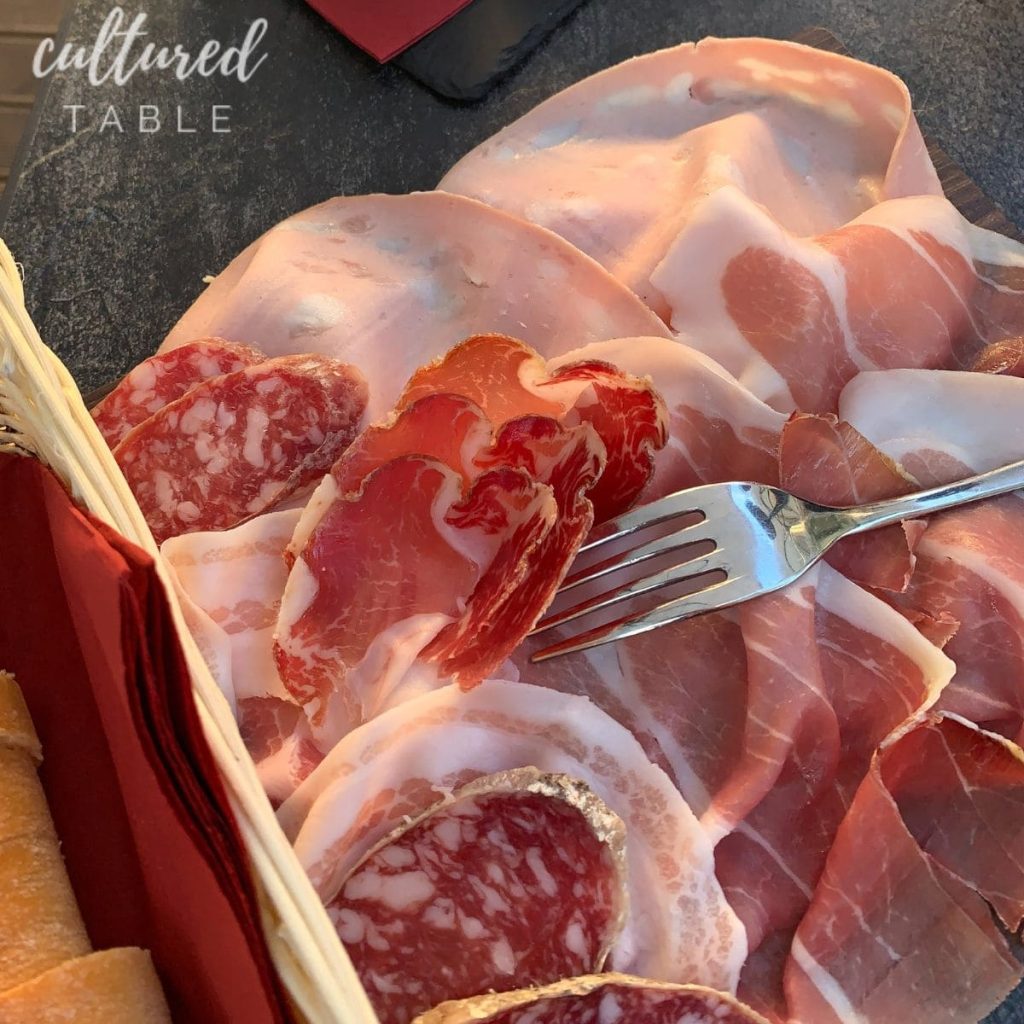
Prosciutto di Parma
Unless you have access to a good Italian deli near you, you’re likely have a single option when buying prosciutto. In Italy? There are numerous types of prosciutto to choose from, each with its own characteristics. Walk into a market and order a pound of prosciutto and the person behind the counter will laugh you out of there. (One, Italians use the metric system, and two, what kind of prosciutto, you nutty American?)
Prosciutto is an aged ham made with a dry curing process. I’ve yet to meet a prosciutto I didn’t love, but prosciutto di Parma is made only in Parma, using specially bred pigs raised in the region. This ham is made without the addition of nitrates and nitrites; it’s aged as it has been for thousands of years, using only salt to preserve the meat. The result is slightly sweet and not overly salty. You can read more about this specialty ham here.
It’s readily available on tasting boards, that feature other salumi, such as culatello, pancetta, and mortadella.
Lambrusco
This sparkling red wine is produced in the Emilia-Romagna region of Italy, which is northeast of the more famous Tuscany wine region. Lambrusco can be dry or sweet, depending on the grapes used to make the wine. The profile of the wine varies by appellation, but at a dinner hosted by a local Parma couple, we were told that it is an excellent choice to pair with a variety of the foods Parma is famous for. It’s tasty without being so strong that it competes with the food on the table.

Tortelli di Erbetta
If it looks like a ravioli, it might be tortelli. A local Parma resident told us that the difference between ravioli and tortelli is that ravioli is stuffed with a meat filling while tortelli is filled with a vegetarian mixture of cheese and greens or herbs. That seems to be specific to Northern Italy, though, according to what I see here.
In any case, Tortelli di Erbetta is a common menu item in Parma and one you should definitely try. These large squares of filled pasta dough feature a blend of ricotta cheese and fresh herbs. They are most often served in a simple sauce so the flavor of the tortelli shines through.
Try your hand at making Italian pasta dough with this recipe.

Torta Frita
While wandering past bustling restaurants, we kept seeing these little puffed squares of dough on tables. You know we had to try them. The flavor reminded me a bit of a lightly toasted fresh tortilla, light and floury and a little crispy. You might also see them called gnocco fritto which translates to fried dough, or in Bologna, crescentina.
We much preferred these than the bread available in Parma, which we found to be mediocre at best. (Sorry, Parma – you can’t win ’em all!)
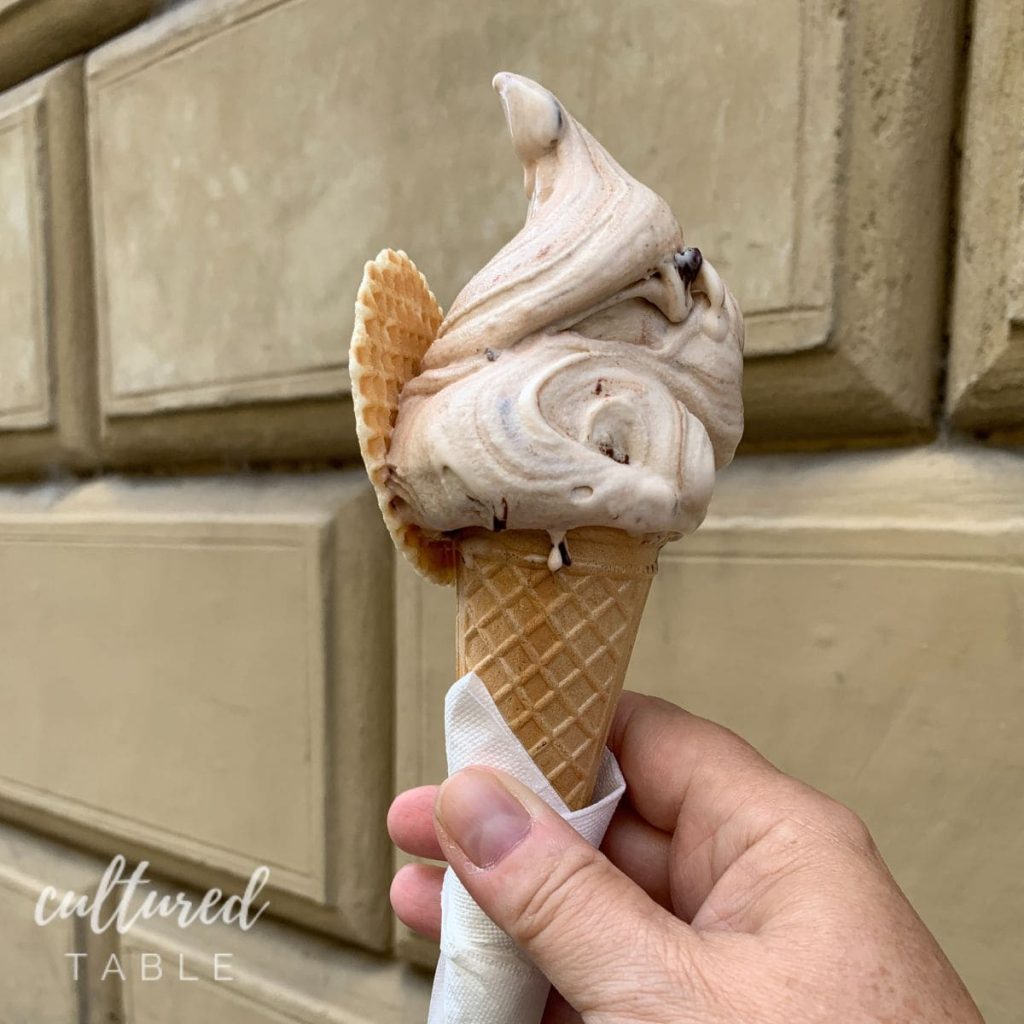
Gelato
The Italian word gelato translates to the equivalent of the English ice cream. But it’s not exactly the same. Gelato has a lower content of milk fat, which results in a creamy, silky texture. One tip from an Italian who knows: Skip the gelaterias with trays piled impressively high with gelato. They might be eye-catching, but the gelato is whipped full of air to achieve that loftiness, resulting in a subpar product.
There are plenty of gelato options in Parma, but we found ourselves enjoying a scoop from Gioelia Creameria on an almost daily basis.
Horse Meat
An unexpected and ever-present menu item, horse meat is offered on almost every menu in Parma. Whether served raw or cooked or as a burger, it’s readily available. We were told that it’s especially good served as a tartare. Despite its low fat and low cholesterol, we just couldn’t bring ourselves to try this one.

Best Bets for Italian Food in Parma
Food Tours
If you really want to dig in an learn more about the foods of Parma, consider a food tour. Knowledgeable guides are a great resource for educating visitors about area specialties and we’ve always gotten some really good tips about what to do in an area after the tour.
- Walking tour of Parma
- Parmesan cheese and ham (all day tour)
Cooking Classes
Learn how to reproduce some of the foods you enjoy on vacation by taking a cooking class. We learned to make tortelli and tiramisu in a private home, which was an absolute delight. Being able to bring some authentic Italian recipes home is a great way to extend the vacation.

Farmers Markets
Purchasing food directly from growers assures that you’re getting the freshest produce and supporting these hard working men and women. As often as not, we’ve found Italian farmers markets by accident, simply stumbling on a hot bed of activity.
There is an enduring farmers market organization in Parma, though, that hosts markets in two different locations, on Wednesday and Saturday. We enjoyed perusing the collection at the Saturday market in Imbriani Square, and it would be a regular part of my weekend if I lived in Italy! From fresh produce and handmade pasta to vinegar, wine, beer, mustard, and cheeses, a person could pick up just about any food item needed to make a meal without stopping at another shop.

Piazza Garibaldi and Strada Farini
This area in downtown Parma is a vibrant center of gastronomy. The historic piazza is home to a handful of restaurants that offer dining in the shadow of the clock tower. From the piazza, walk down Strada Farini — closed to most vehicle traffic, but watch out for bicycles! This street is lined with restaurants and cafes offering both indoor and street-side dining. We loved sitting and watching the locals gather for their afternoon aperitivo.
Sapori & Dintorni Conad
If you’re planning on doing some cooking, or even pulling together a picnic, this grocery store in Piazza Ghiaia can’t be beat. Full to the brim with what Americans would consider gourmet fare, residents and visitors alike can pick up all the groceries they need for cooking at home, along with assorted salumi, cheeses, fresh produce, and wine.
Head over here to learn more about Italy and its food culture.

Leave a Reply